
Table of Contents
Every business leader knows this feeling: the market shifts overnight, and the plans you built last quarter suddenly feel outdated.
Scenario planning addresses this problem directly. The U.S. military pioneered this approach back in the 1950s, using it to project possibilities up to 20 years ahead and guide decisions that shaped entire strategies.
The key insight most leaders overlook is this: scenario planning is not about predicting one future. It is about preparing your organization for several different futures at once, so you are never caught off guard.
This article covers the exact steps, strategies, and real-world business applications of scenario planning. You will learn how to manage uncertainty, build organizational resilience, and make smarter choices before the next disruption arrives.
Key Takeaways
- Scenario planning helps organizations prepare for multiple possible futures rather than betting on single predictions, reducing crisis panic and improving strategic decisions.
- Cross-functional teams using data-driven insights create flexible response plans that allow companies to adapt quickly when market conditions change unexpectedly.
- Organizations that practice scenario planning respond faster than competitors, gain competitive advantages, and build stronger resilience against disruptions and uncertainty.
- Effective scenario planning requires identifying two or three critical uncertainties, developing three to four plausible scenarios, and assessing risks within each future possibility.
- Tools like driver mapping worksheets, scenario matrices, risk assessment frameworks, and ERP systems transform complex planning into manageable activities teams can execute confidently.
What Is Scenario Planning?
Scenario planning is a strategic management approach that prepares organizations for multiple possible futures rather than betting everything on a single prediction. Figures like Paul J. H. Schoemaker and organizations such as Royal Dutch Shell pioneered this methodology, building it on the idea that identifying key assumptions and developing flexible responses in advance gives leaders a real edge.
The core premise is straightforward. The future is uncertain and complex, so teams create several plausible scenarios that explore different combinations of factors.
Unlike traditional forecasting, scenario planning uses systems thinking to recognize how various elements interact in unexpected ways through non-linear feedback loops. Organizations engage in scenario analysis to factor in hard-to-quantify elements like regulatory changes, shifts in values, and unique market insights that standard data analysis might miss.
- Scenario planning, scenario thinking, and scenario analysis all describe the same fundamental process of exploring potential futures.
- Teams assemble cross-functional groups to challenge assumptions and imagine how different business environments might develop.
- The methodology prepares organizations for volatility, uncertainty, complexity, and ambiguity, often called VUCA conditions.
- Military intelligence agencies, corporate strategists, and government planners use this technique to test strategies against multiple futures.
This approach fosters dialogue and team alignment across departments, making it primarily a collaborative technique that builds organizational resilience through structured thinking rather than relying solely on mathematical models.
The scenario development process involves examining external drivers of change, constructing detailed narratives about possible outcomes, and assessing what each scenario means for organizational strategy. This risk management tool helps leaders move past analysis paralysis by providing clear frameworks for decision-making under uncertainty, so businesses can build contingency plans before crises emerge.
Summary of “What Is Scenario Planning?”:
- Prepares for several futures instead of one prediction.
- Uses systems thinking and non-linear feedback loops.
- Encourages collaboration through cross-functional teams.
- Provides a structured way to build flexible contingency plans.
- Interactive modules are available at the career center for deeper learning.
Importance of Scenario Planning in Business
Business leaders face uncertainty every single day. Markets shift. Competitors emerge. Technology disrupts entire industries overnight. Scenario planning gives executives and boards the tools they need to make informed strategic decisions, even when the future remains unclear.
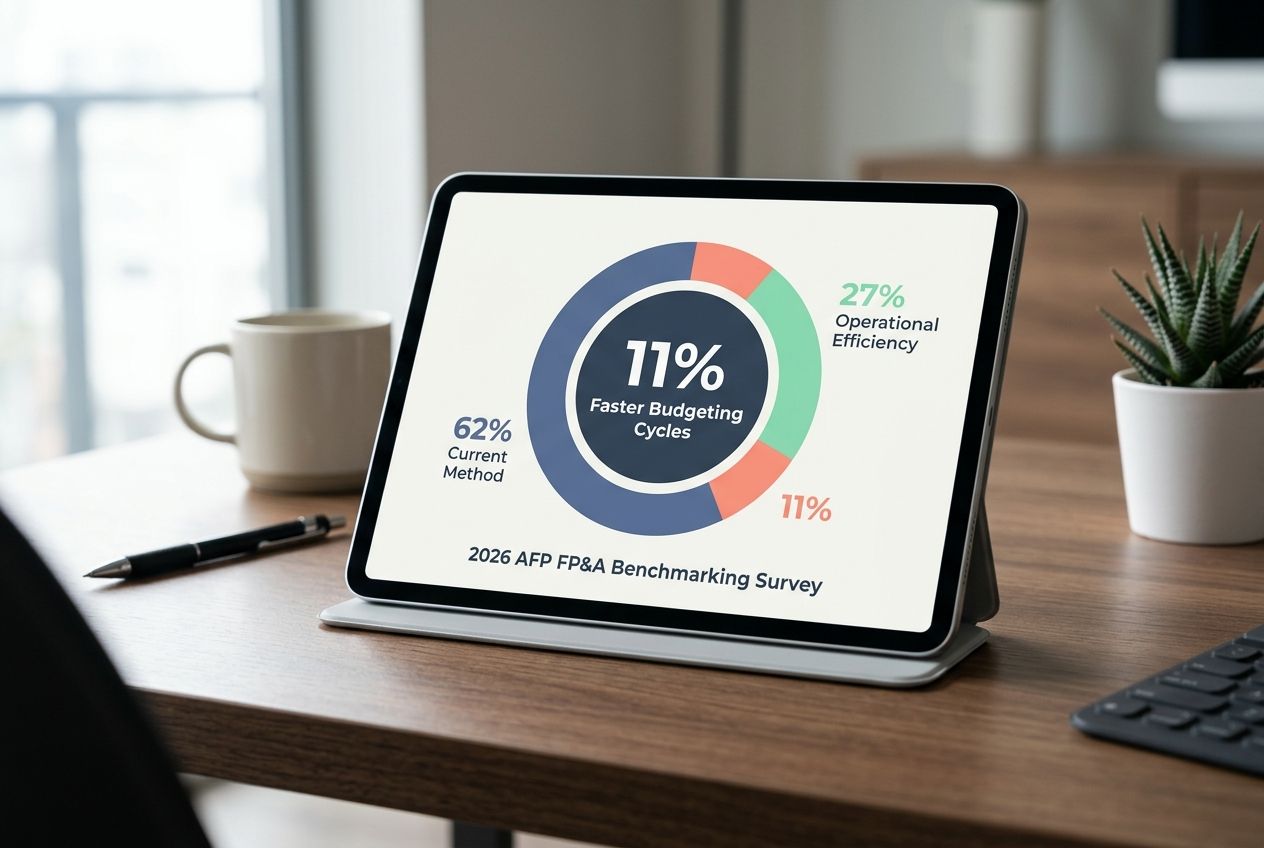
This approach helps organizations understand the effects of plausible events before they actually happen. Finance teams, operations staff, and other departments can prepare in advance rather than scrambling when disruption strikes. According to the 2026 AFP FP&A Benchmarking Survey, organizations that use structured scenario planning complete their budgeting cycles 11% faster on average than those that do not. That is a direct, measurable payoff in core financial operations.
The Royal Dutch/Shell Oil Company pioneered this method decades ago and discovered a powerful truth: companies that practice scenario planning respond faster and more decisively than their rivals.
Scenario planning transforms uncertainty from a paralyzing threat into a manageable challenge that strengthens decision-making.
Risk mitigation becomes easier when you have already mapped out potential futures. Stakeholder engagement improves because everyone understands the strategic objectives and the risks that could derail them. Teams across your organization align around a shared vision of what might come next.
Contingency planning transforms from a reactive scramble into a proactive strategy. Your business continuity efforts strengthen considerably. The competitive advantage you gain is real and measurable because you have already thought through the consequences.
Summary of “Importance of Scenario Planning in Business”:
- Helps prepare for uncertainty and faster budgeting cycles.
- Provides measurable financial benefits, such as an 11% faster budgeting cycle.
- Fosters stakeholder alignment and proactive risk management.
- Enhances overall organizational resilience.
Advantages of Scenario Planning
Scenario planning delivers concrete advantages that transform how organizations prepare for uncertainty. Decision-makers gain the ability to identify a range of potential outcomes, evaluate responses, and manage both positive and negative possibilities before they occur.
This proactive approach reduces the need to scramble during a crisis. Documenting action plans beforehand saves time and resources when emergencies strike. Teams capture insights and recommendations from key personnel, ensuring preparedness even if individuals become unavailable due to illness, departure, or other circumstances.
The strategic planning process serves as an integrated approach to addressing uncertainty, going far beyond simple financial planning or basic forecasting methods. Organizations that embrace scenario planning enable proactive management of risks and opportunities, positioning themselves to respond faster than competitors who rely on reactive strategies.
Who Uses It and Why It Works
Scenario planning strengthens organizational resilience across multiple levels, from disaster recovery initiatives to long-term strategic growth. The RAND Corporation pioneered this methodology, demonstrating how wargames and scenario exercises prepare military and civilian leaders for complex challenges.
Federal agencies like the National Park Service and NASA employ scenario planning to address climate resilience and operational contingencies. Teams assemble cross-functional expertise, drawing from policy and advocacy specialists, climate models experts, and strategic management professionals.
- Data-driven insights replace guesswork, letting organizations test assumptions against real-world variables.
- This approach eliminates cognitive bias by forcing teams to consider multiple futures rather than anchoring to a single prediction.
- Companies build stronger agility because they have already stress-tested their strategies before conditions change.
A February 2026 analysis by Financial Models Lab found that companies demonstrating high strategic agility through scenario planning achieved an average revenue growth premium of 4.5% over their less agile peers in 2025. That figure replaces any vague claim about “competitive advantage” with hard evidence linking this practice directly to top-line growth.
Summary of “Advantages of Scenario Planning”:
- Enables proactive risk and opportunity management.
- Builds organizational agility and long-term growth.
- Uses data to replace guesswork and reduce cognitive bias.
- Supports clear benefits such as revenue growth premiums.
Common Challenges and Limitations
Organizations face real obstacles when they pursue scenario planning. The process demands significant time and resources, especially for large enterprises managing complex operations.
Teams must gather data, analyze trends using PEST analysis frameworks, and construct multiple futures. External analysts or experts often become necessary because scenario planning requires specialized knowledge that internal staff may lack.
Leaders accustomed to concrete data struggle with the inherent ambiguity that scenarios introduce. Cognitive biases can distort analysis, pushing teams toward favored outcomes rather than objective assessments.
- Analysis paralysis strikes when organizations create too many scenarios or get lost in endless refinement.
- Overconfidence in particular scenarios can lead teams to ignore warning signs or dismiss alternative possibilities.
- Resource constraints limit how frequently companies can refresh their analyses.
The rapid pace of change compounds these difficulties. Influencing factors shift constantly, which means organizations must continually update their scenario planning efforts to stay relevant. A scenario built on last year’s market conditions may miss emerging disruptions entirely. As highlighted in a 2026 report from Financial Models Lab, the average cost of a single, major supply chain disruption event for large US manufacturers in FY2025 was estimated at $105 million. That figure makes the cost of outdated scenarios very concrete.
Teams struggle to balance thoroughness with practicality, knowing that perfect plans never arrive. Business strategy experts across the country recognize these tensions. Even military organizations and national planning conference participants acknowledge that scenario planning requires ongoing investment and adaptation.
Companies must accept that their plans will never capture every possibility. They must still commit resources to the effort anyway.
Summary of “Common Challenges and Limitations”:
- Time and resource intensive process.
- Risk of analysis paralysis and cognitive bias.
- Continuous updating is needed due to rapid changes in factors.
- Balancing detail with practicality remains a challenge.
Types of Scenario Planning
Organizations use two main approaches to map out future possibilities. Quantitative scenarios rely on numerical data and statistical models, while strategic management scenarios focus on how market forces and business decisions shape competitive advantage. Understanding both helps you choose the right method for your planning goals.
Quantitative Scenarios
Quantitative scenarios present financial models that show best-case and worst-case outcomes for your business. These models use specific numbers and data to predict what might happen under different conditions.
Companies adjust quantitative scenarios by changing a limited number of variables, such as sales volume, production costs, or market demand. This approach lets you see how small changes in key factors affect your overall financial performance. The challenge is that building these models requires solid data infrastructure. An October 2025 QuickBooks study revealed that 45% of businesses cite inadequate reporting and data analysis capabilities as a major hurdle to financial forecasting. This is exactly why the right tools matter so much when you start building quantitative scenarios.
Break-even analysis plays an essential role in this process. It determines the minimum sales volume your company needs to operate normally without losing money. The U.S. military and various planning organizations use quantitative scenarios to prepare for multiple futures and test their financial readiness.
- Financial professionals rely on quantitative scenarios to make informed decisions about resource allocation and risk management.
- These models transform complex business situations into clear, measurable projections that teams can understand and act upon.
- Scenario forecasting typically predicts a single most likely outcome for short-term planning using historical data, and it often serves as the first step that informs broader scenario planning efforts.
Strategic Management Scenarios
Strategic management scenarios focus on the external environment of products and services, not just internal company operations. These scenarios examine market forces, competitor moves, regulatory changes, and customer behavior shifts that shape your industry.
Royal Dutch Shell pioneered this approach and discovered that scenario planning changes mindsets about external factors before teams develop specific strategies. This method opens the door to broader analysis and brainstorming beyond what happens inside your walls. You explore possibilities that most companies miss because they stay focused on internal metrics alone.
Normative scenarios often describe preferred or achievable end states, incorporating organizational goals into the planning process. This means you do not just predict what might happen. You also define what you want to achieve and work backward from there.
- Strategic management scenarios demand that you examine forces outside your direct control, from technological disruption to geopolitical shifts.
- Your team gathers data about market trends, consumer preferences, and industry transformations that could reshape your business landscape.
- Response plans address different possibilities, so your organization moves fast when change arrives.
Herman Kahn, a pioneering thinker in scenario development, emphasized that organizations must prepare for multiple futures rather than betting on a single outcome. This practical wisdom guides companies through crisis management and contingency planning. Isle Royale National Park managers, for example, use similar environmental scenario planning to prepare for climate impacts and visitor pattern changes.
Strategic management scenarios transform how leaders think about risk, opportunity, and organizational resilience in an unpredictable world.
Summary of “Types of Scenario Planning”:
- Quantitative scenarios use numerical models and break-even analysis.
- Strategic management scenarios focus on external market forces and organizational goals.
- Each type offers unique insights for risk assessment and planning.
- Interactive learning modules may be found on conferences and learning platforms.
Steps to Effective Scenario Planning
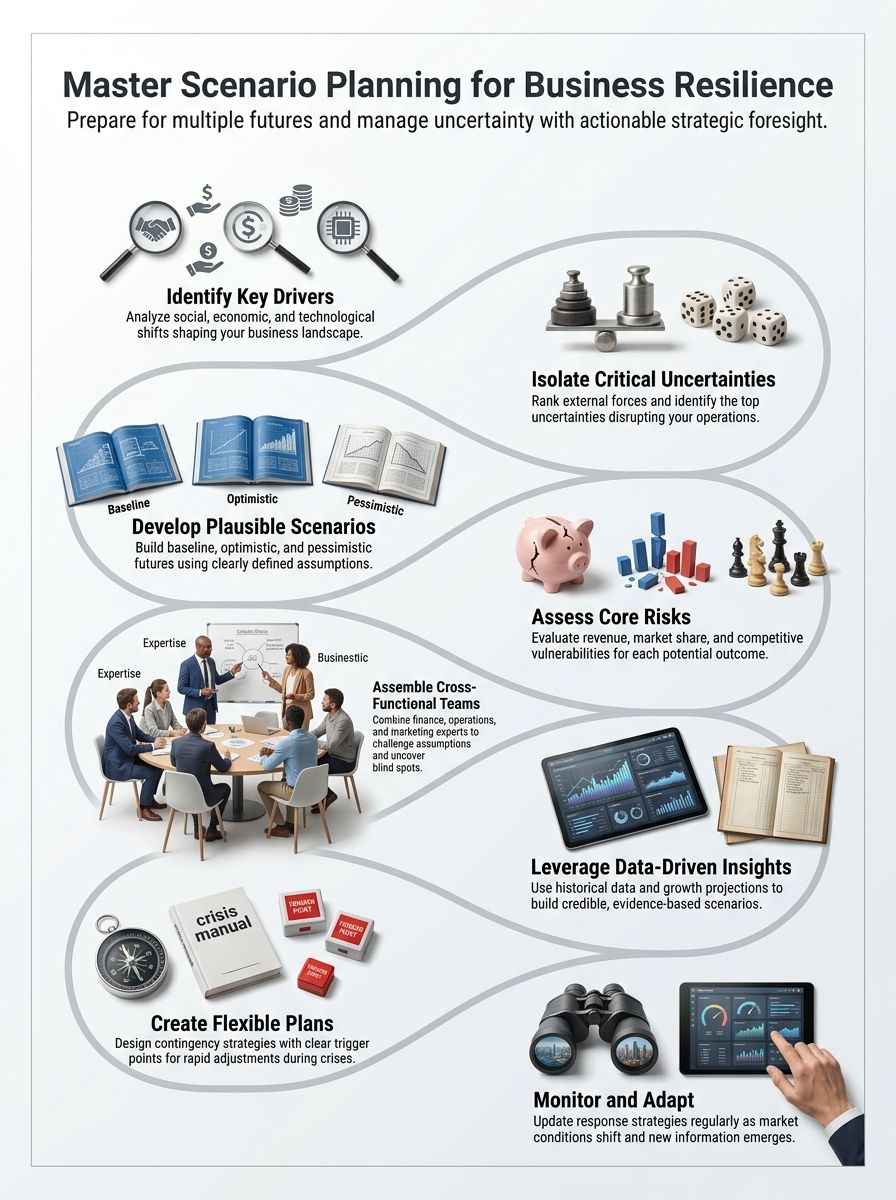
Identify Key Drivers of Change
Your organization must start by discussing potential significant shifts in society, economics, technology, and politics that could affect your company. These drivers shape your business landscape and determine which scenarios matter most.
You should examine social trends, economic cycles, technological breakthroughs, and regulatory changes. In agribusiness, for example, food prices and consumer demand act as critical forces that reshape market conditions. Cybersecurity is another driver you cannot ignore. According to a February 2026 Zurich Resilience study, nearly half of US small- and medium-sized businesses reported experiencing a cyber incident in 2025. That kind of external pressure belongs on your driver map alongside economic and regulatory forces.
Your team needs to look beyond obvious factors and dig into emerging patterns that competitors might miss. This foundational step separates companies that react to change from those that anticipate it.
- Narrow your focus to the two or three uncertainties with the greatest impact on your business.
- The scenario planning matrix helps you organize this work by listing key issues, your time horizon, and major external influences all in one place.
- Rank critical uncertainties by their potential to disrupt operations.
Develop Plausible Scenarios
Building realistic scenarios requires you to use two critical uncertainties as your axes. This creates a matrix that generates four potential future outcomes and keeps your planning focused and manageable.
Many teams make the mistake of crafting too many scenarios, which only complicates the entire planning process. Start with three scenarios instead: your best guess for what will happen, a more optimistic scenario representing about 25% probability, and a more pessimistic scenario also at roughly 25% probability. These three scenarios give you a solid foundation without overwhelming your team.
Your scenarios must rest on clearly defined assumptions that your team can track over time. Establish Key Performance Indicators, or KPIs, that let you monitor whether your assumptions hold true as conditions change.
- Each scenario should highlight key differences from the others, so your team grasps how different futures demand different responses.
- Use distinct scenarios to stress-test strategies and identify which decisions work across multiple futures.
- This method ensures your organization stays flexible and prepared, regardless of which path the business environment actually takes.
Assess Implications and Risks
Your organization must examine how each scenario influences your strategic viewpoint and operational decisions. You analyze what happens to revenue, market share, customer behavior, and competitive position under each scenario.
This step separates serious planning from guesswork. You identify which risks emerge in each scenario, then prioritize them by impact and likelihood. A supply chain disruption scenario, for instance, reveals different risks than an economic downturn scenario.
Your team documents these risks using risk assessment matrices or impact-probability charts. You also map out how each scenario affects your technology needs, staffing requirements, and financial resources. Data-driven insights guide your thinking here. You rely on market research, historical trends, and expert judgment to build credible risk profiles.
- Develop response strategies for the highest-priority risks identified across all scenarios.
- Ask which early warning signs indicate that a specific scenario is unfolding.
- Identify what decisions must be made now to maintain flexibility.
- Determine the resources needed, including the right data, technology, and skills for scenario development and upkeep.
Summary of “Steps to Effective Scenario Planning”:
- Identify significant drivers such as trends, cycles, and technological changes.
- Develop three clear scenarios using critical uncertainties.
- Assess the risks and implications for each scenario thoroughly.
- Establish KPIs to track assumptions over time.
Strategies for Successful Scenario Planning
Assemble a Cross-Functional Team
Building a cross-functional team forms the backbone of effective scenario planning. You need people from different departments, roles, and expertise areas working together.
Each person brings unique perspectives that challenge assumptions and uncover blind spots. Secure commitments from senior management early in the process. Their buy-in ensures the team has real authority to explore difficult questions and make bold recommendations.
Think about who belongs at the table:
- Finance professionals bring budget insights.
- Operations leaders understand production limits.
- Marketing teams know customer behavior.
- Sales staff grasp market realities.
- Human resources experts understand workforce capabilities.
Collaboration among leaders is necessary to identify potential risks and yield valuable insights that single departments might miss. You can hire a strategy consultant to enhance the effectiveness of scenario planning sessions without needing to establish an internal strategy officer. These consultants bring outside experience and facilitate tough conversations between teams that might not normally work together.
Your cross-functional team should meet regularly, share data openly, and challenge each other’s assumptions in a respectful way. Members leave department loyalties behind and focus on what is best for the organization. This collaborative structure turns scenario planning from a theoretical exercise into a practical tool that drives real business decisions.
Use Data-Driven Insights
Data drives better decisions in scenario planning. Your team needs accurate information beyond the general ledger to build strong scenarios.
Pull historical sales data, growth projections, and cost assessments into your planning process. These numbers show what actually happened and point to trends for the future. Guesswork has no place in strategic planning.
ERP systems like NetSuite help you gather current conditions, trends, and historical data in one place. This data integration keeps your team on solid ground instead of relying on assumptions that could lead you astray.
- Collect and review historical sales records and cost trends.
- Examine market trends that have previously shaped your business.
- Base your scenarios on real evidence, not mere hunches.
Create Flexible Response Plans
Your organization needs response plans that shift and adapt as conditions change. Finance leaders must evaluate various strategic options in real time, so your plans cannot remain rigid or fixed in one direction.
Build contingency strategies that allow your teams to monitor decisions and make effective adjustments quickly. Your finance, operations, and other departments must prepare in advance for multiple futures. This preparation helps everyone understand the actions to take if specific scenarios unfold.
- Include trigger points, decision trees, and clear communication channels in response plans.
- Establish checkpoints where leaders assess whether the original plan still fits the situation.
- Create frameworks that permit strategy shifts without losing momentum or wasting resources.
Summary of “Strategies for Successful Scenario Planning”:
- Build a diverse, cross-functional team to challenge assumptions.
- Rely on clear, data-driven insights to inform scenarios.
- Develop flexible response plans with defined trigger points.
- Regular team collaboration improves decision-making.
Real-World Applications of Scenario Planning
Organizations use scenario planning to prepare for crises, market shifts, and unexpected disruptions that threaten their operations. Companies develop contingency plans, test response strategies, and build resilience by examining multiple futures before challenges emerge.
Crisis Management and Contingency Planning
Crisis management and contingency planning work together to protect your business during tough times. Crisis management focuses on immediate responses to sudden disasters or emergencies, while contingency planning prepares you for long-term disruptions that affect revenue and operations.
Gimbloo Software, a young business software company, understood this difference well. The company conducted weekly cash forecast scenarios centered on collection efficiency during a crisis. This approach allowed Gimbloo to assess collections and predict potential declines in client payments, integrating critical factors affecting Monthly Recurring Revenue, or MRR.
Their strategy shows how scenario planning helps identify and plan for challenges to reduce company exposure and strengthen response capabilities. You develop flexible response plans that address both immediate threats and long-term uncertainties, ensuring your organization survives and adapts.
- Anticipates risks through early identification and planning.
- Reduces reaction times during crises.
- Supports quicker recovery with pre-set response strategies.
Long-Term Strategic Growth
Organizations that use scenario planning gain a clear advantage in building sustainable growth over years and decades. This approach helps companies test different strategies under various market conditions, which means leaders make smarter choices about where to invest resources.
Scenario planning informs research and development efforts by exploring technology trends, marketplace demands, and regulatory changes that could shape the future. Teams can allocate budgets more efficiently when they understand multiple possible futures. Companies develop sales plans that work across different economic situations, testing approaches before committing real money.
The process reveals which growth paths remain viable even if markets shift unexpectedly, creating a foundation for decisions that hold up over the long haul.
- Enhances strategic foresight for long-term growth.
- Helps leaders adjust budgets based on multiple future scenarios.
- Strengthens sales and R&D planning.
- Interactive insights are available through glisa events and conferences and learning sessions.
Summary of “Real-World Applications of Scenario Planning”:
- Improves crisis response and contingency measures.
- Supports long-term growth and resource allocation.
- Integrates flexible planning for immediate and future challenges.
- Engagement tools are integrated into learning platforms.
Tools and Templates for Scenario Planning
Multiple frameworks and templates exist that help companies build effective scenario planning processes from the ground up. These resources transform complex planning into manageable, structured activities that teams can execute with confidence and clarity.
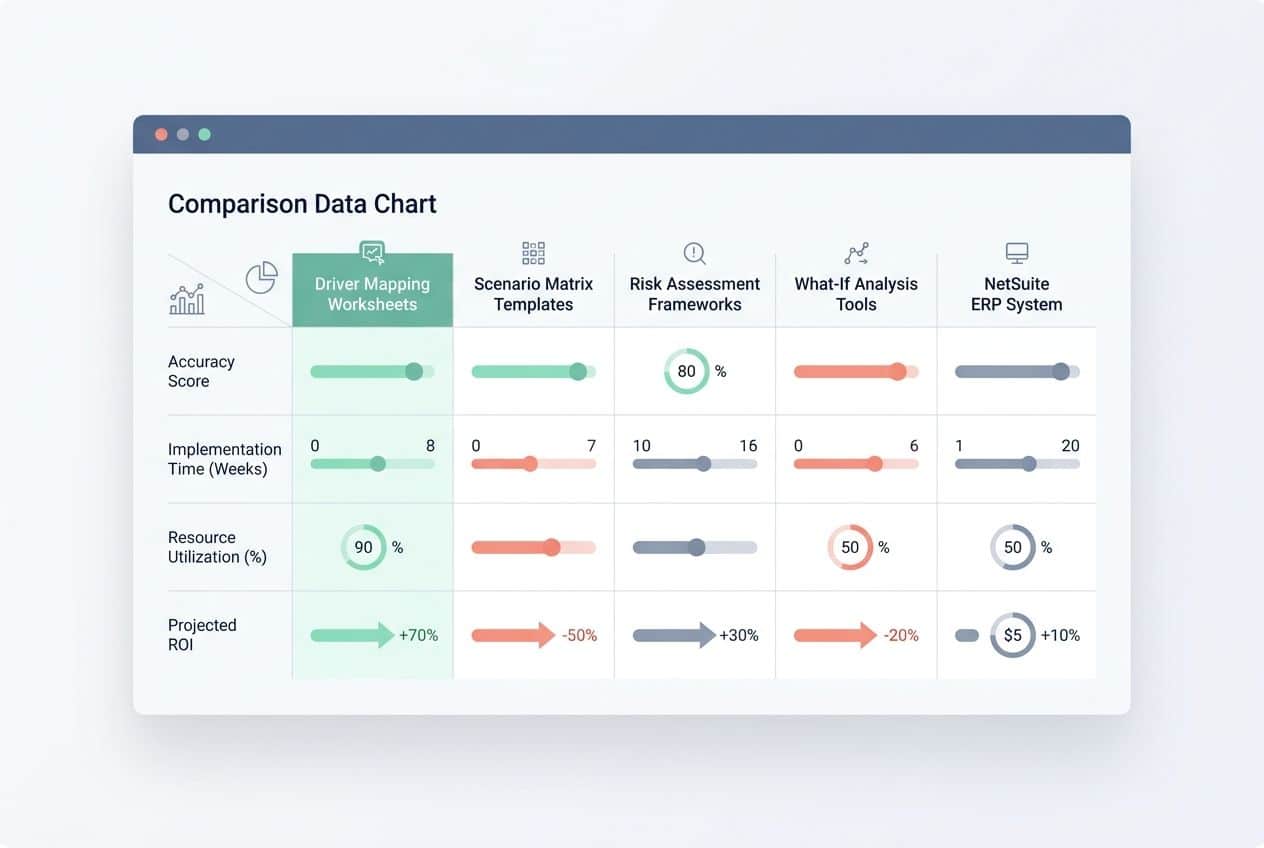
| Tool or Template | Primary Function | Best Use Cases | Key Benefit |
|---|---|---|---|
| Driver Mapping Worksheets | Identifies key drivers of change affecting your business environment | Strategic planning sessions; identifying external factors; market analysis | Teams pinpoint what truly matters for their industry and competitive position |
| Scenario Matrix Templates | Organizes multiple scenarios using two or more critical variables as axes | Demand forecasting; supply chain disruption modeling; market volatility assessment | Creates visual clarity around different possible futures your company may face |
| Risk Assessment Frameworks | Evaluates potential implications and threats within each scenario | Crisis management planning; contingency development; threat identification | Reveals vulnerabilities before they become actual problems in operations |
| What-If Analysis Tools | Simulates various business situations using quantitative data and variables | Financial modeling; operational planning; performance prediction | Provides real-time visibility into how different decisions impact your bottom line |
| NetSuite ERP System | Integrates what-if scenario planning with real-time operational and financial visibility | Demand surges; supply chain disruptions; month-end close acceleration; strategic growth | Finance leaders reduced month-end close time by significant margins after implementation; enables rapid scenario testing |
| Response Plan Templates | Documents flexible actions and contingencies for each scenario outcome | Long-term strategy development; resource allocation; decision trigger points | Transforms planning insights into concrete actions your team can deploy quickly |
| Cross-Functional Planning Guides | Structures collaboration between departments with different perspectives and expertise | Enterprise-wide planning; breaking down silos; holistic strategy development | Ensures finance, operations, marketing, and supply chain voices shape scenarios together |
| Data-Driven Insight Dashboards | Aggregates market data, internal metrics, and trend analysis into visual formats | Scenario development; assumption validation; strategic decision-making | Anchors all scenario development and assumption validation in real-world evidence rather than guesswork |
Summary of “Tools and Templates for Scenario Planning”:
- Provides structured frameworks for building scenarios.
- Includes tools for risk assessment and financial modeling.
- Helps teams transform planning into actionable insights.
- Supports effective strategy development in various industries.
Conclusion
Scenario planning transforms how organizations prepare for uncertain futures. It moves teams from reactive crisis mode to proactive decision-making.
Your business gains real power when you build three core scenarios, assemble cross-functional teams, and ground every plan in data-driven insights. Companies that master this approach respond faster to market shifts, protect revenue streams, and spot opportunities before competitors do.
Start small with your first scenarios today. Test your response plans and watch your organization become more resilient against whatever comes next.
The tools and templates you choose matter less than your commitment to continuous planning and honest team conversations about what might happen.
Summary of “Conclusion”:
- Transforms reactive approaches into proactive strategies.
- Enhances resilience and speeds decision-making.
- Encourages continuous planning and team alignment.
FAQs
1. What is scenario planning, and why does it matter for businesses?
Scenario planning is a strategic method that helps organizations prepare for uncertainty by developing and analyzing multiple plausible future scenarios. Companies use it to test decisions against different possible futures, reducing risk and improving adaptability when market conditions shift.
2. What are the key steps in the scenario planning process?
Start by identifying the key uncertainties and driving forces affecting your business, then develop three to four distinct but plausible scenarios around them. Test your current strategy against each scenario and build flexible response plans that work across multiple futures.
3. How do real-world businesses apply scenario planning?
Shell has used scenario planning since the 1970s to navigate oil price volatility and energy transitions, making it a pioneer in this approach. Many Fortune 500 companies now run scenario exercises quarterly to prepare for supply chain disruptions, regulatory shifts, and changes in customer demand. It gives leadership teams a shared framework for making fast decisions without losing sight of strategic priorities.
4. Can small businesses benefit from scenario planning too?
Small businesses benefit by running simplified scenario exercises focused on their biggest vulnerabilities like cash flow changes, key customer loss, or new local competition. Even a basic two-scenario session can help owners spot early warning signs and prepare backup plans without hiring consultants.
Disclosure: The content cites data from the 2026 AFP FP&A Benchmarking Survey, a 2026 report from Financial Models Lab, a February 2026 Zurich Resilience study, and an October 2025 QuickBooks study. No affiliate relationships or sponsorships influenced this content.